
Active Warrants in Otter Tail County
The Otter Tail County Sheriff's Office posts the listing, and the county says it is refreshed each day. Warrants arrive from district court, where a judge signs them after a complaint, a missed hearing, or a probation violation. The sheriff keeps the ones the office is actively serving. City police fold in warrants from their own cases. An active warrant simply means one that has been issued and not yet served, recalled, or cleared. That sounds simple. It is narrower than it looks, though, because a warrant can be absent from the report while a warrant cleared yesterday may still show up on a copy posted this morning. The county also calls this an active warrant listing rather than a most-wanted program, and the difference matters. What you are reading is a working law-enforcement report, not a curated roster of the county's biggest cases.
The Six Columns in an Otter Tail Active Warrant Row
Every page of the Otter Tail County report repeats the same six column headers. Each column carries different weight when you are working out what happened in a case.
- Name
- The subject field. It reflects the court record, which may differ from a nickname or married name.
- Issue date
- The date the warrant was entered. It shows how old the matter is, not how urgent it is.
- Level of offense
- Felony, gross misdemeanor, misdemeanor, or not provided.
- Reason for warrant
- Free text such as FTA, writ of attachment, probation violation, or stay of execution.
- Nightcap
- A display note reading nightcapped or not nightcapped. The county does not define it publicly.
- Notes
- A header with occasional extra text, not a bond amount or status code.
How the Otter Tail County Active Warrant List Works
The file is built from court and law-enforcement entries and posted as a static document, which is why it reads like a printout. It carries a date and time stamp, page numbers, and repeated headers. The same person can appear more than once when separate hearings produced separate entries. Read it in the order that answers your question. Find the name first. Then read the reason, which tells you what the court event was. Then check the issue date to see how old the warrant is. The offense level comes last, since it shapes how the case is processed rather than what your next step should be in Otter Tail County.
Note: The county says the list is updated daily, but it publishes no statement that the report contains every warrant in the county.
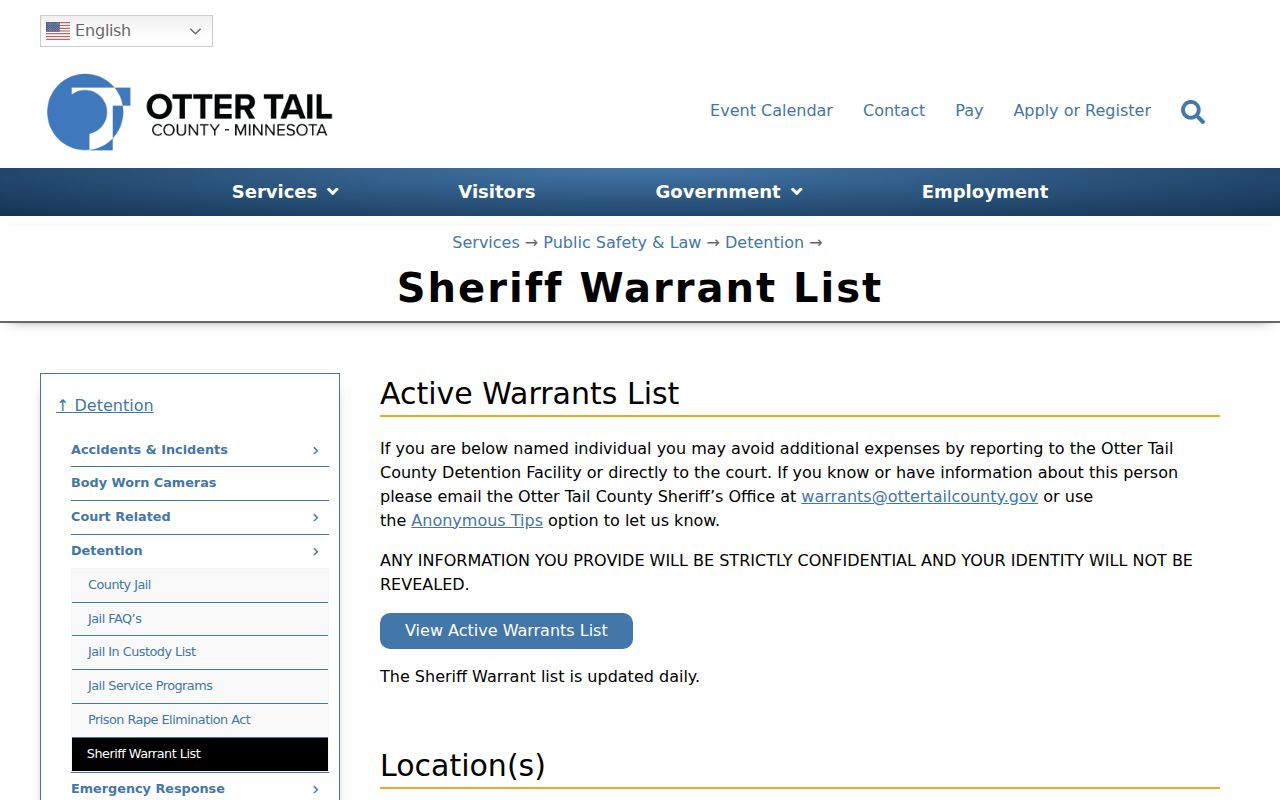
The county warrant page is the durable link. The report file itself can move around.
Daily Update Does Not Mean Complete
Daily and complete are different claims, and the county only makes the first one. Its detention pages warn that law-enforcement information may not be current, accurate, or complete. People also give false or incorrect identifying details, which pins names on records that belong to someone else. A missing name is therefore weak evidence. A warrant issued this afternoon may not be posted yet. A warrant under seal will never be posted. And a warrant held by another county or a federal court does not belong on the Otter Tail County report at all, so check with the issuing court if your question matters.
What an Active Warrant Shows
A row in the report is only a summary. It answers who, when, and why, and stops there. Everything that decides what happens to the person named lives in the court file, and Court Administration is the office that reads it out.
| Warrant Number | Not shown. Ask Court Administration for the case file number, for example 56-CR-26-0000. |
|---|---|
| Charge or Offense | A level of offense and a free-text reason, not the charge statute. |
| Issuing Court | Not shown. The Otter Tail County District Court holds the file. |
| Bond Amount | Not shown, because a judge sets release conditions on the warrant or at the first appearance. |
| Status | Listed as active. There is no served, recalled, or cleared column. |
Bring the case number to any bond conversation. That number is how the court pulls the file.
What the 2024 Otter Tail Sheriff Report Does Not Count
The sheriff's 2024 year-end report is the strongest recent operations source for Otter Tail County. Readers often mistake its figures for an outstanding-warrant count. They are not that. The report measures detention and calls for service.
Bookings and court processing describe people already in custody. The search-warrant figure counts calls for service. None of these numbers tells you how many active warrants Otter Tail County holds.
Most-Wanted Lists and Warrant Roundups
Otter Tail County runs no separate most-wanted program, reward schedule, or roundup calendar. The daily active list is the county's public warrant interface. It is broader and less curated than a most-wanted roster.
Key Point: The Sheriff's Office active list is the authoritative public source. The Active Warrants List page links to it, and entries change as warrants are served or recalled.
Note: The county publishes the report at its own site, linked above; this page does not republish names, photos, or rows from it.
The Otter Tail County most wanted page explains what a curated program looks like and why this county's list differs.
Nightcapped and Not Nightcapped on the Otter Tail List
The word nightcap shows up in the report's note area, and it is one of the most misread details in the file. Nothing the county publishes explains it. No published rule ties it to a release decision, a bond amount, or an after-hours procedure. That gap matters because readers guess. Some assume a nightcapped entry means the person must be held overnight. Others read it as a note about when an officer may execute the warrant. Neither reading is documented. If a specific case turns on that note, ask the Detention Facility or Court Administration what it means for that file instead of relying on a definition found elsewhere.
Confirm an Otter Tail Warrant Recall Before You Rely On It
A name disappearing from a warrant list settles nothing in Otter Tail County. The recall is real only once the issuing court enters the order and law enforcement refreshes its records, and those two steps rarely land together. So ask Court Administration for the signed order or the updated register-of-actions entry. Then ask the Sheriff's Office directly whether its list has been refreshed. Watch for a leftover traffic or licensing consequence, and get every confirmation in writing before you rely on it.
Note: A warrant does not disappear because a report stopped listing it. Only the issuing court can confirm that it was recalled.
If Your Name Is on the List
The county gives its own instruction for a listed name: report to the Detention Facility or go straight to the court, and you may avoid extra expenses. Call first. You want to know which case and which judge hold the Otter Tail County warrant before you walk in anywhere. A lawyer can do real work here. An attorney may request a court date and argue for release conditions under the Minnesota rules, which is hard to do alone. For the steps that resolve an active warrant, including how bond works and how a recall happens, the county warrant records home page lays them out. The order matters, though. Confirm the case, talk to counsel, then appear.
Important: Do not wait for the report to change on its own. A name on the active list can lead to arrest at any traffic stop or contact with an officer.