
Bench Warrants in Otter Tail County
A bench warrant is a judge's order that a person be brought before the court, nothing more and nothing less. It is not a new charge. It also does not replace the underlying case. In Otter Tail County the trigger is usually a missed court date, but an unpaid court obligation or a broken condition can lead to one as well. Someone can pick up a bench warrant on a misdemeanor file while nothing else is pending. The warrant's whole purpose is to place the person in front of the judge, and the judge sorts out what follows. Minnesota courts rarely say capias. The county's daily report speaks in hearing language, and that free-text reason field is how most people learn an active bench warrant exists at all.
FTA Is the Local Bench-Warrant Vocabulary
The Otter Tail County report writes reasons, not categories. Learn those phrases before calling the court.
- FTA
- Failure to appear. The person missed a required court setting, and the reason often names the hearing.
- Writ of attachment
- Court process used to secure an appearance or enforce an order. It is not the same as a complaint warrant.
- Stay of execution
- A sentencing and status phrase in the reason field, not a standalone warrant type.
- Probation violation
- An allegation that the person broke a condition of probation, which can produce a warrant.
- Release-condition violation
- An allegation that the person broke a pretrial condition after release.
Minnesota never uses the term capias pro fine. See it online and it describes some other state's process, not Otter Tail County's.
How an Otter Tail County Bench Warrant Is Issued
Every bench warrant starts with a court event that never happened. Minnesota rule 6.01 requires a citation to warn that failing to appear or contact the court may bring a warrant, so the warning sits on paper the person already holds. Once the date passes with no appearance, the court can issue the warrant from the bench. The judge signs it. From there it enters the court and law-enforcement systems, and it eventually shows up on the sheriff's daily report as a free-text reason. Nothing in that chain alerts the person named. That is why people find out weeks later. To locate the missed setting, search the court's hearing records by case number, and the register of actions will show what occurred on the scheduled date.
Note: A bench warrant is entered in court records first, and the sheriff's daily report picks it up afterward, so the two sources can disagree on any given morning.
The Hearings That Trigger an Otter Tail County Bench Warrant
Any required setting can produce a warrant if missed. In Otter Tail County, early appearances dominate, since they fall before counsel or routine set in.
- First appearance after a citation or charge
- Arraignment on a gross misdemeanor or felony file
- Pretrial and omnibus hearings
- Jury roll call
- Sentencing and probation review hearings
A missed hearing is not the only route. Failing to finish a court-ordered condition can land a case back before a judge and draw a warrant.
Bench Warrant vs Arrest Warrant
Both types let an officer take a person into custody. What separates them is the source and the purpose behind each order.
| Point of Comparison | Bench Warrant | Arrest Warrant |
|---|---|---|
| What starts it | A missed court obligation or a violation of a court condition | A complaint and sworn facts showing probable cause |
| What it enforces | Appearance in an existing case | Custody on a charged offense |
| Who issues it | The judge handling the case | A district court judge after review |
| How it ends | A new appearance, a recall, or a resolution of the case | Service, first appearance, and release or detention decisions |
Court Administration, Not a Separate JP Counter
Otter Tail County runs one district court, so there is no justice-of-the-peace counter keeping its own bench-warrant list. Court Administration on Floor A2 of the courthouse keeps the criminal and traffic files, the calendars, and the bail accounting for all of them. City attorneys still prosecute many offenses inside city limits, and a bench warrant on one of those files remains a district court warrant. A city police department can explain a citation but cannot clear the case. For what the public may see, the state's court rules page carries the current public access and criminal procedure rules that govern those files.
How to Resolve a Otter Tail County Bench Warrant
Resolving the warrant means putting the case back on a calendar before the judge who issued it. That happens by a scheduled appearance, a surrender at the detention facility, or a motion from an attorney. The file decides the route. Only the court can say for sure.
Caution: A bench warrant does not expire and does not fix itself. Delay adds court costs and can turn a missed hearing into a separate failure-to-appear charge.
First confirm the case number and the missed setting. Ask Court Administration whether the judge wants a scheduled appearance or a surrender, and what documents to bring. At the appearance, ask about release under the rule that presumes release without bail unless safety or appearance concerns justify more. Last, request the signed recall order or the updated register entry.
The 11 a.m. First-Appearance Pattern
Once custody begins, the timing follows a pattern a family can plan around. The county jail FAQ gives an arrested person 48 hours to be seen by a judge or have the arrest reviewed, and it says first appearances are generally held at the courthouse at 11:00 a.m. on normal business days. The criminal rules set a tighter mark. They require an appearance without unnecessary delay and no later than 36 hours after arrest. Weekends and holidays push hearings to the next court day in practice. So Court Administration, not a clock, is the dependable source for the actual date.
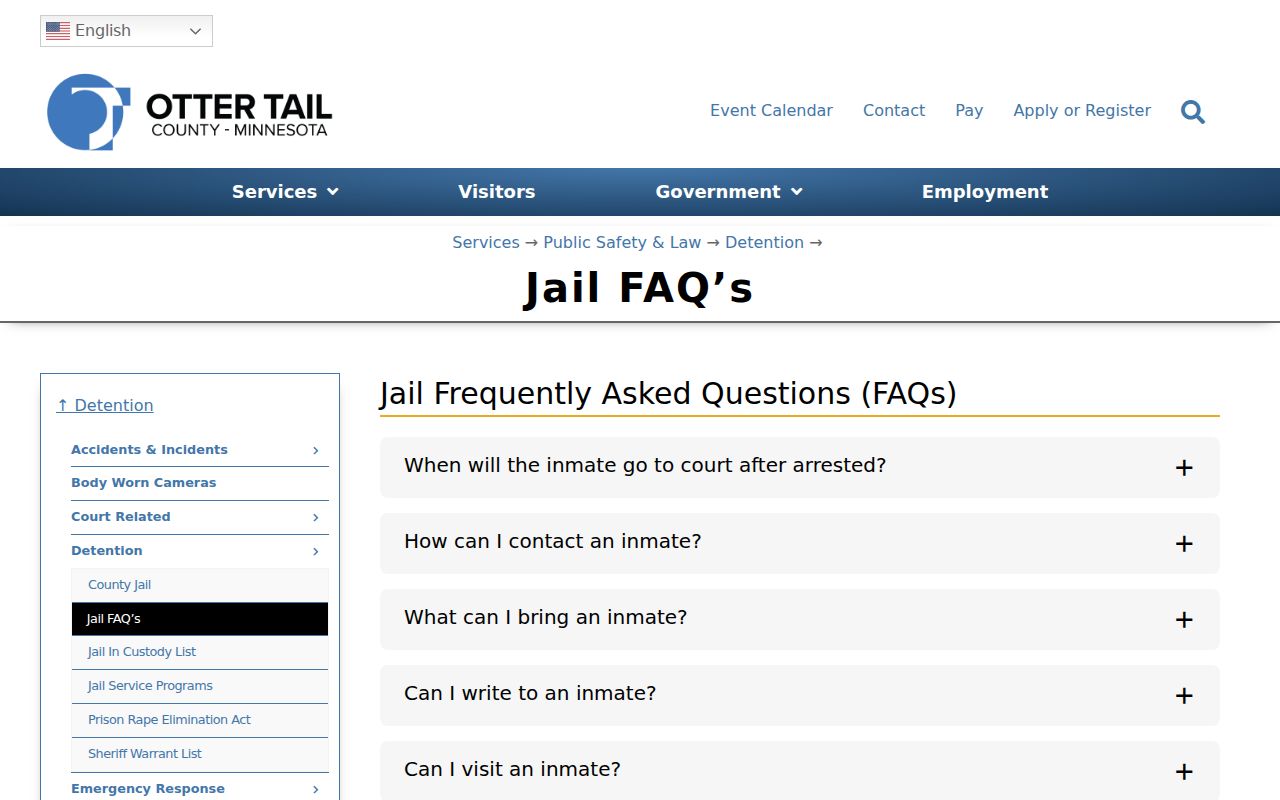
The jail FAQ also explains that first appearances are scheduled through Court Administration.
Ask Before You Report to an Otter Tail County Detention Facility
The Otter Tail County warrant page tells a listed person that reporting to the Detention Facility or the court may avoid added expenses. That is sound practical advice. It is not a promise of anything else. A walk-in may still mean booking, the judge may not release the person that day, and no particular bond is guaranteed.
Key Point: Call before you go. Ask which case holds the warrant, where to report, what identification to bring, and whether the court will calendar the matter instead.
Jot down every answer, plus the name of whoever gave it. If a lawyer is already on the case, that lawyer can often set up the court appearance so no Otter Tail County custody stay is needed at all.
Which Otter Tail County Court Issued It
One courthouse issues every Otter Tail County bench warrant, though separate divisions hold the files. The table maps each office to what it keeps and the phone number to call.
| Court or Office | What It Holds | Phone |
|---|---|---|
| Otter Tail County District Court, criminal and traffic | Criminal, gross misdemeanor, misdemeanor, traffic, and ordinance cases with FTA process | 218-560-7045 |
| District Court juvenile division | Juvenile matters with restricted access | 218-560-7045 |
| Court Administration | Records, calendars, bail accounting, and public case access | 218-560-7045 |
| Sheriff and Detention Facility | Execution, custody, and the daily active list | 218-998-8555 or 218-998-8556 |
You will find the courthouse at 121 West Junius Avenue in Fergus Falls, with weekday counter hours. Otter Tail County staff can arrange an interpreter or an accommodation if you call ahead.