
Arrest Warrants in Otter Tail County
An arrest warrant gives an officer legal authority to take someone into custody on a charged offense. In Otter Tail County, the document comes from the district court after a prosecutor files a complaint. A judge reads the sworn facts behind that complaint first, then decides what should follow. Nothing happens automatically here. Minnesota starts from a summons, which orders a person to appear without any arrest power attached. A warrant enters the picture when the facts suggest a summons will be ignored, when the person cannot be located, or when a court date alone will not handle the risk. On the sheriff's daily report, these cases appear with complaint warrant reasons attached. Each row lists the offense level plus a brief reason. The full story sits in the court file, which is where a serious warrant check should end up.
Rule 3 Probable Cause in Otter Tail County
Minnesota rule 3.01 supplies the standard. Facts in the complaint, in supporting documents, or in sworn testimony must establish probable cause that an offense occurred and that the defendant committed it. A district court judge in Otter Tail County weighs that material and decides whether a warrant should issue at all. The rule also spells out the contents. A warrant must identify or describe the defendant, name the offense, and state bail or release conditions whenever a judge sets them. Then the judge signs. An officer authorized by law executes it, and the person arrested goes before the court promptly.
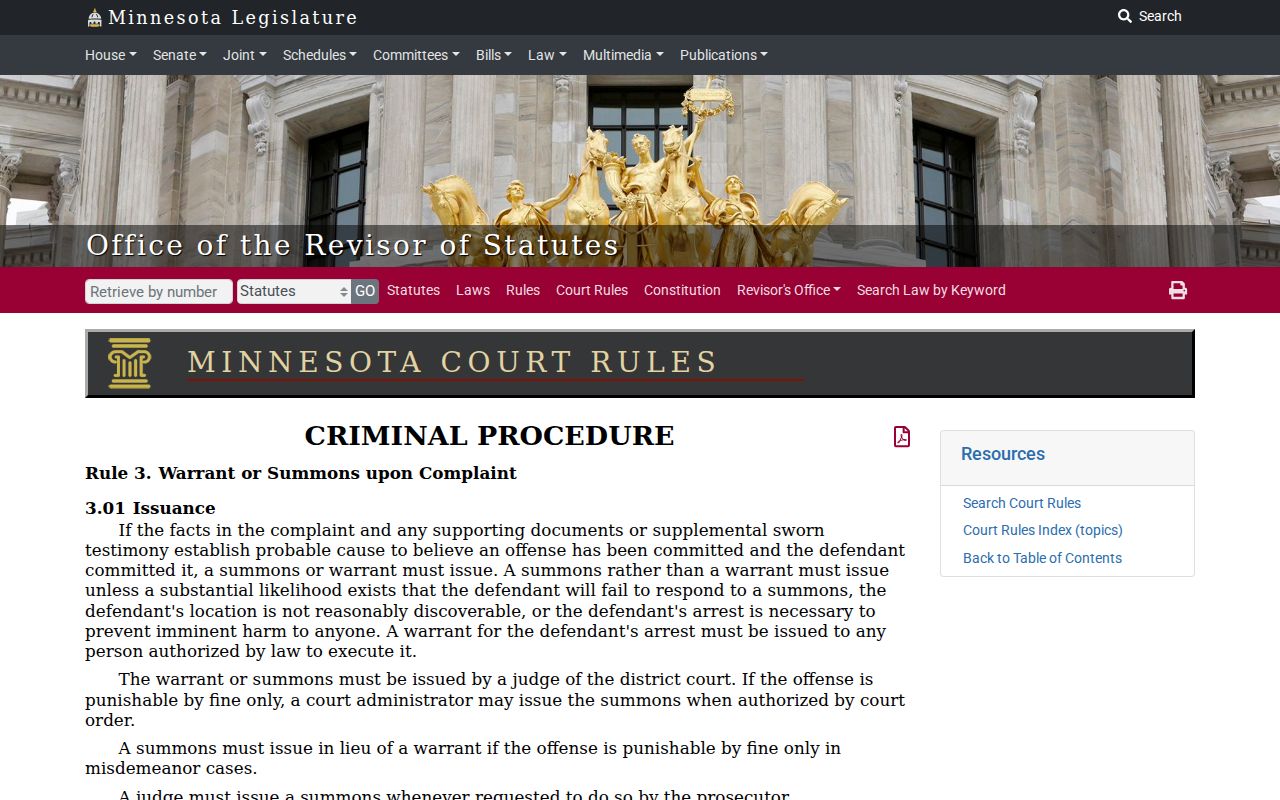
The issuance and contents rule is short, and it shows why the same charge can bring a warrant or a summons in Otter Tail County.
What an Otter Tail County Arrest Warrant Contains
Think of the warrant as a court order with identifying details attached. It is narrower than the case file behind it. Here is what an Otter Tail County warrant carries and where each piece comes from.
| Defendant Identification | The name or a description sufficient to identify the person, required by rule. |
|---|---|
| Offense Description | A statement of the charged offense, connected to the complaint. The public report reduces this to a level. |
| Issuing Court and Judge | The Otter Tail County District Court and the judge who signed it. Not shown on the daily report. |
| Bail and Conditions | Set when applicable, and stated on the warrant. Often decided at the first appearance instead. |
| Case File Number | The court identifier, for example 56-CR-26-0000. Ask Court Administration for it. |
| Service Certification | The record that an authorized officer executed the warrant and returned it to the court. |
Bond Is a Court Field, Not a List Field
The daily report never lists a bond amount. That is by design, not oversight. In Otter Tail County, a judge sets bail and release conditions, either on the warrant itself or at the first appearance, and those terms shift as the case moves. A figure right on Monday can be stale by Wednesday.
Key Point: Ask Court Administration for the current release order before you plan anything. Minnesota presumes release without bail or on an unsecured bond unless the judge finds a reason for more.
Any money bail must carry a cash or surety option. Where a bond gets posted, and which payment the counter takes, varies by case in Otter Tail County. Ask the jail or the court. Never assume the terms match another file.
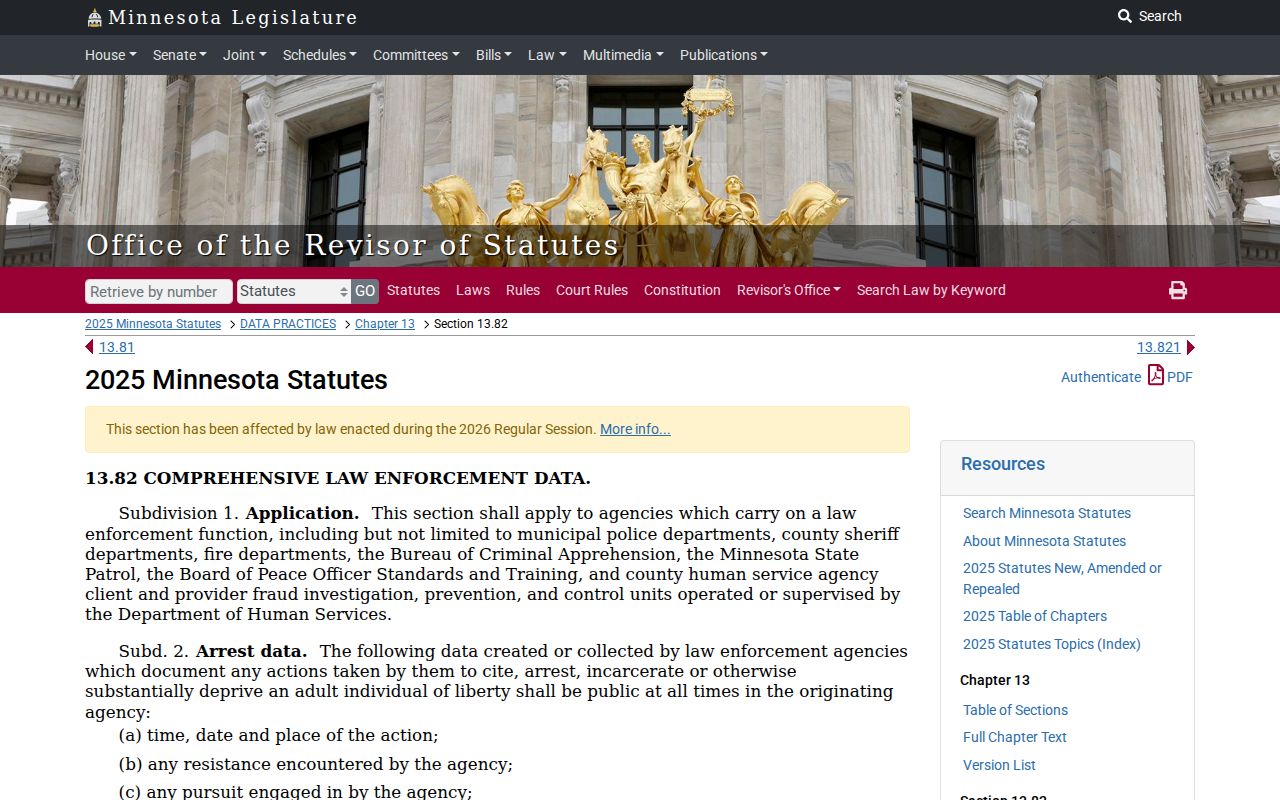
The arrest-warrant index rule also explains why Otter Tail County keeps some bond and warrant detail confidential until custody, service, or appearance.
How Otter Tail County Arrest Warrants Are Served
A warrant can be executed anywhere in Minnesota by an officer authorized by law. Locally, that means sheriff's deputies, city police, and other agencies tied to the case, with assignment depending on the file and where the person turns up. Service has limits too. Misdemeanor warrants generally cannot be executed at night or on Sunday except in stated circumstances, though an officer may still act when the person is found on a public highway. The person has to be told about the warrant and the charge. After the arrest, the court comes next. Timing is where things get muddy: the rule speaks in hours, the jail FAQ speaks in days. Call the Otter Tail County jail or Court Administration for the real hearing time.
Felony, Gross Misdemeanor, or Misdemeanor on the Otter Tail List
The Otter Tail County report sorts offenses into levels, not charges. Felony, gross misdemeanor, and misdemeanor each signal something about how the case gets handled. Some rows simply read as not provided. The level is not a sentence and not a bond. It only reflects how the offense is classified. If you are checking your own file, the charge matters more, and the charge comes from the complaint.
Note: A felony row and a misdemeanor row can look identical in format, so read the level before you assume the stakes.
Arrest Warrant vs Summons vs Bench Warrant
Three different documents can bring a person before a Minnesota court. In Otter Tail County, their differences shape how a case begins.
| Process | What It Does | When It Is Used |
|---|---|---|
| Summons | Orders an appearance without authorizing immediate arrest | The preferred route when the person is likely to respond |
| Arrest warrant | Authorizes an officer to take the person into custody | When the court finds a reason a summons will not work |
| Bench warrant | Enforces an appearance or a court condition in an open case | After a missed hearing or a violation |
36 Hours in the Rule and 48 Hours at the Jail
Two official timing statements govern the first hours after an arrest, and they disagree on the number. The criminal rule demands an appearance without unnecessary delay, no later than 36 hours after arrest, excluding the day of arrest, or as soon as a judge is available when court is not in session. The jail FAQ instead describes a 48-hour window to be seen by a judge or have the arrest reviewed. Both are real rules. The gap comes down to weekends, holidays, and when the arrest happened. In Otter Tail County, first appearances generally run at the courthouse at 11:00 a.m. on normal business days, scheduled through Court Administration.
Where Federal Warrants Fit
A federal arrest warrant never comes from Otter Tail County. Federal judges and magistrates issue them on a complaint or indictment. The Marshals Service then handles service. The District of Minnesota is the court that covers Otter Tail County, and its North Star Fugitive Task Force works fugitive cases across the state. Do not expect a federal warrant on the county's daily report. A county warrant search will not clear one either. Federal dockets live in PACER, and some warrants stay sealed until served. The federal clerk or the Marshals can confirm what exists.
What to Do If There Is a Warrant for You
An active arrest warrant in Otter Tail County means you could be taken into custody at any point. Move with a plan. Call an attorney before anything else. A lawyer can reach out to the prosecutor, ask whether the court will take a scheduled appearance in place of an arrest, review the complaint, and build the argument for release. From there, the county lays out the options plainly. You can turn yourself in at the Detention Facility or go straight to the court. If the judge sets bond, posting it gets you released. Ask about a recall when the facts support one. The Otter Tail County warrant records home page explains each step, including what to bring and who to call.
Important: Do not test a warrant at a traffic stop or wait for a routine contact to find out. An officer who confirms it will make the arrest.